
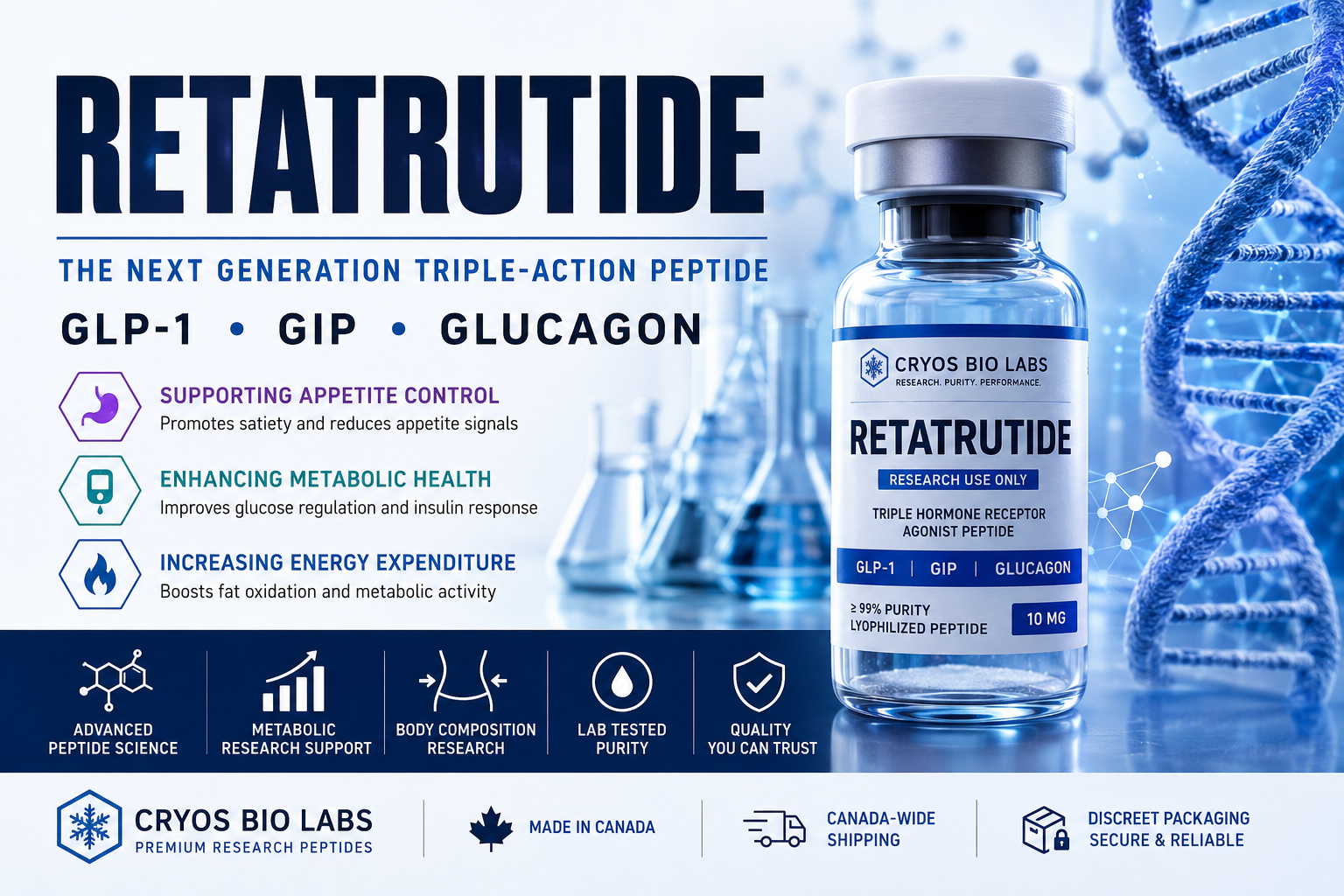
Retatrutide: The Next Generation Triple-Action Peptide for Weight Management and Metabolic Health
Retatrutide Explained: How This Triple Hormone Receptor Agonist Is Changing Metabolic Research
The field of metabolic health research has advanced rapidly over the last decade, with peptide science leading the way in the development of innovative compounds that target obesity, insulin resistance, and overall metabolic function. One of the most promising compounds currently being studied is Retatrutide, a next-generation investigational peptide that has generated significant interest within the scientific community.
Unlike earlier peptide therapies that target a single receptor, Retatrutide is designed as a triple hormone receptor agonist, activating the GLP-1 (Glucagon-Like Peptide-1), GIP (Glucose-Dependent Insulinotropic Polypeptide), and Glucagon receptors simultaneously. This unique mechanism has positioned Retatrutide as one of the most advanced metabolic research peptides currently under investigation.
At Cryos Bio Labs, we are committed to providing premium-quality research peptides manufactured under strict quality standards for laboratory and scientific research purposes. This article explores what Retatrutide is, how it works, its potential research applications, and why it has become one of the most discussed peptides in metabolic research.
What Is Retatrutide?
Retatrutide is an investigational synthetic peptide developed to mimic the activity of three naturally occurring metabolic hormones:
- GLP-1
- GIP
- Glucagon
These hormones work together to regulate multiple physiological pathways involved in:
- Appetite regulation
- Blood glucose control
- Energy expenditure
- Fat metabolism
- Gastric emptying
- Insulin secretion
By targeting all three pathways simultaneously, researchers believe Retatrutide may offer broader metabolic effects compared to earlier peptide compounds that activate only one or two receptors.
Although still undergoing clinical investigation, Retatrutide has demonstrated encouraging research outcomes in studies examining body composition, metabolic regulation, and energy balance.
How Does Retatrutide Work?
Retatrutide functions by binding to three different receptors throughout the body.
GLP-1 Receptor Activation
GLP-1 receptor activation has become well known within metabolic research because it may:
- Reduce appetite signals
- Slow gastric emptying
- Improve satiety
- Enhance insulin release
- Improve glucose regulation
These mechanisms help researchers understand how calorie intake and body weight may be influenced through hormonal pathways.
GIP Receptor Activation
GIP is another incretin hormone that works alongside GLP-1.
Research suggests GIP activation may contribute to:
- Improved insulin sensitivity
- Enhanced glucose metabolism
- Better nutrient utilization
- Support for healthy pancreatic function
Combining GLP-1 and GIP receptor activity appears to create complementary metabolic effects.
Glucagon Receptor Activation
The glucagon receptor distinguishes Retatrutide from previous generations of metabolic peptides.
Activation of glucagon receptors has been associated with:
- Increased energy expenditure
- Enhanced fat oxidation
- Greater metabolic activity
- Improved lipid metabolism
Researchers believe this additional mechanism may explain why Retatrutide has shown particularly strong outcomes in metabolic studies.
Why Is Retatrutide Different?
Many metabolic peptides currently being studied focus primarily on appetite suppression.
Retatrutide takes a broader approach by targeting several physiological systems simultaneously.
Potential mechanisms under investigation include:
- Appetite regulation
- Increased satiety
- Higher caloric expenditure
- Enhanced fat utilization
- Improved glucose metabolism
- Better insulin response
- Increased metabolic flexibility
Rather than relying on one hormonal pathway, Retatrutide integrates three complementary mechanisms that may work synergistically.
Potential Research Applications of Retatrutide
Although Retatrutide is strictly intended for research purposes, investigators continue exploring numerous areas where its biological activity may prove valuable.
Current areas of interest include:
Weight Management Research
One of the primary research interests involves understanding how multiple metabolic hormones influence body weight regulation.
Researchers are studying:
- Appetite control
- Caloric intake
- Body fat reduction
- Lean body mass preservation
- Long-term metabolic adaptation
Obesity Research
Obesity is a complex metabolic condition involving hormonal regulation, inflammation, insulin resistance, and energy balance.
Retatrutide is being investigated for its potential role in understanding:
- Energy homeostasis
- Hormonal signaling
- Fat storage
- Appetite regulation
- Weight maintenance mechanisms
Insulin Resistance Studies
Scientists are also examining whether activation of GLP-1 and GIP receptors may improve metabolic flexibility in research models involving insulin resistance.
Areas under investigation include:
- Insulin sensitivity
- Glucose uptake
- Pancreatic beta-cell activity
- Blood sugar regulation
Fat Metabolism Research
The glucagon component has generated interest because it may increase lipid oxidation.
Research focuses on:
- Fat utilization
- Energy production
- Brown fat activation
- Resting metabolic rate
- Lipid metabolism
Cardiometabolic Health
Investigators are exploring potential relationships between metabolic peptides and cardiovascular biomarkers.
Research areas include:
- Cholesterol metabolism
- Blood pressure regulation
- Inflammatory markers
- Cardiovascular risk factors
Benefits Being Explored in Research
While further clinical investigation is ongoing, researchers continue evaluating Retatrutide for potential effects involving:
- Reduced appetite
- Increased fullness
- Enhanced energy expenditure
- Improved metabolic efficiency
- Fat oxidation
- Glucose regulation
- Body composition
- Weight maintenance
- Metabolic flexibility
These findings remain under scientific investigation and should not be interpreted as established therapeutic outcomes.
Retatrutide vs Semaglutide
Semaglutide primarily activates one receptor:
- GLP-1
Retatrutide activates:
- GLP-1
- GIP
- Glucagon
This additional receptor activity may influence:
- Energy expenditure
- Fat metabolism
- Metabolic rate
Researchers continue comparing both compounds to understand differences in biological activity.
Retatrutide vs Tirzepatide
Tirzepatide activates:
- GLP-1
- GIP
Retatrutide adds:
- Glucagon receptor activation
This third pathway may contribute additional metabolic effects currently under scientific investigation.
Why Researchers Are Excited About Triple Agonists
Metabolic diseases involve multiple hormonal pathways.
Instead of focusing on only one hormone, triple agonists attempt to coordinate several biological systems simultaneously.
Researchers believe this strategy may better reflect natural physiology.
Potential advantages being studied include:
- Broader metabolic response
- Greater energy expenditure
- More complete hormonal signaling
- Improved metabolic regulation
Retatrutide Research and Body Composition
Body composition extends beyond simple weight loss.
Investigators are studying whether Retatrutide influences:
- Fat mass
- Lean tissue
- Muscle preservation
- Waist circumference
- Visceral fat
Understanding these effects may provide valuable insights into metabolic adaptation.
The Science Behind Energy Expenditure
One distinguishing feature of Retatrutide research is its potential influence on total daily energy expenditure.
Rather than focusing solely on reducing calorie intake, scientists are also investigating whether glucagon receptor activation may increase the number of calories the body utilizes.
Current research examines:
- Resting metabolic rate
- Thermogenesis
- Fat oxidation
- Mitochondrial activity
- Cellular energy production
Laboratory Research Considerations
Retatrutide is supplied for laboratory research purposes only.
Proper handling includes:
- Storage according to manufacturer recommendations
- Sterile laboratory techniques
- Accurate measurement protocols
- Controlled research environments
Researchers should always follow established laboratory standards.
Why Quality Matters
High-quality research begins with high-quality materials.
At Cryos Bio Labs, every peptide is selected with quality and consistency in mind.
Our commitment includes:
- High purity research peptides
- Laboratory-grade manufacturing
- Batch consistency
- Secure packaging
- Canada-wide shipping
- Reliable customer support
Quality remains essential for obtaining consistent and reproducible research outcomes.
Frequently Asked Questions
What is Retatrutide?
Retatrutide is an investigational triple hormone receptor agonist targeting GLP-1, GIP, and glucagon receptors for metabolic research.
How is Retatrutide different from Semaglutide?
Semaglutide activates only the GLP-1 receptor, while Retatrutide activates three separate metabolic hormone receptors simultaneously.
Is Retatrutide approved?
Retatrutide remains under clinical investigation and is not approved for general therapeutic use in many jurisdictions.
Why are researchers interested in Retatrutide?
Scientists are investigating its potential role in appetite regulation, metabolic health, fat metabolism, insulin sensitivity, and energy expenditure due to its unique triple-receptor mechanism.
What makes triple agonists unique?
Triple agonists activate multiple hormonal pathways involved in metabolism, providing researchers with opportunities to better understand complex physiological processes.
Why Choose Cryos Bio Labs?
Cryos Bio Labs is dedicated to supplying premium research peptides trusted by laboratories and scientific professionals across Canada.
We focus on:
- Premium research quality
- Carefully sourced ingredients
- Strict quality standards
- Secure packaging
- Fast Canada-wide delivery
- Educational resources
- Outstanding customer support
Whether researching metabolic regulation, peptide biology, or next-generation hormone receptor agonists, Cryos Bio Labs is committed to providing dependable products that meet the highest expectations for laboratory research.
Final Thoughts
Retatrutide represents one of the most exciting developments in modern peptide research. By combining GLP-1, GIP, and glucagon receptor activation into a single investigational molecule, researchers now have an opportunity to explore a more comprehensive approach to metabolic regulation than ever before.
Its unique triple-action mechanism has made Retatrutide a major focus of ongoing scientific investigation into weight management, energy expenditure, glucose metabolism, and body composition. While research continues to evolve, the growing interest surrounding this peptide highlights its importance within the future of metabolic science.
For laboratories seeking premiumquality research peptides backed by consistent quality standards and dependable Canadian service, Cryos Bio Labs remains committed to supporting scientific advancement with products manufactured for research excellence.
Retatrutide Canada, Retatrutide peptide, buy Retatrutide Canada, Retatrutide research peptide, triple agonist peptide, GLP-1 GIP glucagon peptide, metabolic research peptide, weight management peptide research, laboratory-grade Retatrutide, peptide research Canada, metabolic health peptide, premium research peptides Canada, Cryos Bio Labs, GLP-1 research, GIP peptide research, glucagon receptor agonist, obesity research peptide, body composition research, energy expenditure peptide, high-purity Retatrutide.